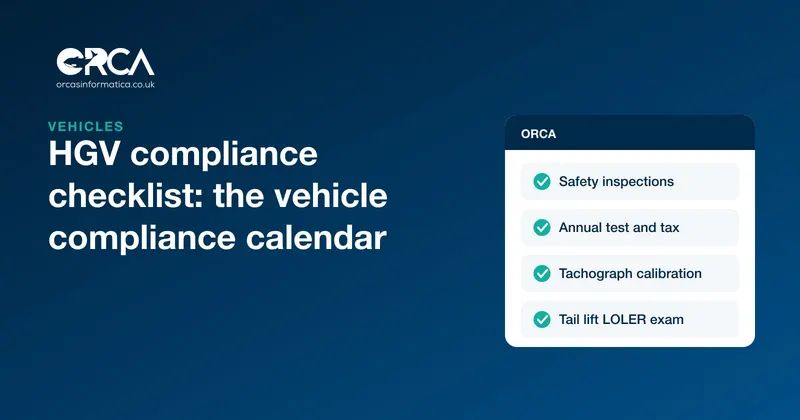
An HGV compliance checklist is really a calendar. Every lorry and trailer carries its own set of dates: a safety inspection every 4 to 13 weeks, an annual test every 12 months, tachograph calibration every 2 years, vehicle tax and insurance renewals, and for many removals and delivery vehicles a tail lift examination every 6 or 12 months. Miss one and the vehicle is illegal or unsafe to use, and the gap shows up in your records when DVSA or a Traffic Commissioner looks.
This guide lists every recurring date for a UK goods vehicle, where each one comes from, and how to turn them into a calendar that plans ahead rather than reacts.
The dates every HGV carries
| Check | How often | Official source |
|---|---|---|
| Driver walkaround check | Before the vehicle is used each day | Guide to maintaining roadworthiness |
| Safety inspection | Every 4 to 13 weeks, set on your licence; at least every 6 weeks for vehicles 12 years and older | Guide to maintaining roadworthiness |
| Brake performance assessment | At every safety inspection | Guide to maintaining roadworthiness |
| Annual test (the HGV MOT) | 12 months after first registration, then every year | GOV.UK annual test |
| Trailer annual test | Usually 1 year after first sold or supplied, then every year | GOV.UK annual test |
| Digital tachograph calibration | Every 2 years, and after certain repairs or changes | Drivers' hours and tachographs guidance |
| Tail lift thorough examination | Every 6 months if it lifts people, otherwise every 12 months, unless an examination scheme says otherwise | HSE |
| Vehicle tax | When it runs out | Check vehicle tax |
| Insurance | At renewal | Your policy |
Safety inspections: the date that matters most
DVSA's Guide to maintaining roadworthiness says safety inspection intervals would normally range between 4 and 13 weeks, depending on how hard the vehicle works. A tipper on site work sits at the short end; a lightly loaded vehicle on easy motorway work can sit at the long end. Vehicles and trailers aged 12 years and older must be inspected at least every 6 weeks.
Whatever interval you declared on your operator licence is the one you must keep. The guide expects every safety inspection to include a brake performance assessment, and calls a laden brake test at every inspection best practice. Where an electronic braking performance monitoring system is not used, it expects at least four laden brake tests spread evenly across the year.
The guide also says inspections should be planned at least 6 months in advance. That is the heart of a compliance calendar: the dates are known before they arrive, booked with the maintenance provider, and visible to everyone who plans work for the vehicle.
Annual tests for lorries and trailers
A goods vehicle over 3,500 kg needs an annual test rather than a car-style MOT. The first test is due 12 months after the vehicle was first registered, and then every year. Trailers are usually first tested one year after they were first sold or supplied.
Test slots at busy sites go quickly, so book well ahead of the expiry date, and line the test up with a safety inspection where you can, so defects are found and fixed before the vehicle is presented.
Tachograph calibration
GOV.UK guidance says digital and smart tachographs must be recalibrated every 2 years, and also after any repair to the tachograph, if the registration number changes, if the clock is out by more than 20 minutes, or after a change to the tyre size or characteristic coefficient. Calibration is done by the vehicle manufacturer or an approved calibration centre, and the date is shown on the plaque. Older analogue tachographs have their own cycle of inspections and recalibration.
Tail lifts and the LOLER examination
Removals and multi-drop vehicles often have a tail lift, and a tail lift is lifting equipment. Under the Lifting Operations and Lifting Equipment Regulations (LOLER), HSE says lifting equipment used to lift people must be thoroughly examined at least every 6 months, and other lifting equipment at least every 12 months, unless a written scheme of examination sets different intervals. If anyone ever rides the platform, plan on 6 months. The examiner's report gives the date of the next examination, which goes straight into the calendar.
Tax, insurance and paperwork
- Vehicle tax. Check the tax status of each vehicle and renew before it runs out. Keeping vehicles taxed is one of the standard promises an operator makes.
- Insurance. Note each policy's renewal date and the vehicles it covers, and update it when vehicles join or leave the fleet.
- Operator licence. A goods vehicle operator licence carries a continuation fee every 5 years, and the Traffic Commissioner must be told about certain changes within 28 days.
A month-by-month routine
You will not find a fixed month for most of these dates, because each vehicle has its own. What works is a routine that runs every month:
- Look 6 months ahead and confirm every safety inspection is booked.
- Look 3 months ahead for annual tests, tachograph calibrations, tail lift examinations and insurance renewals, and book them.
- Look 1 month ahead for vehicle tax.
- Look back at last month: was every inspection done on time, and was every defect fixed?
- Update the calendar when a vehicle joins or leaves the fleet, or changes the work it does.
Run the routine on the same day each month, and keep a note that you did.
What goes wrong
- Dates in someone's head. The one person who knows when the lorries are due goes on holiday.
- Drift. A 6-week interval quietly becomes 7, then 8.
- A vehicle that falls off the list. A new lorry or a hired trailer is never added to the planner.
- Booking too late. The test expires because no slot was free.
- Tachograph and tail lift dates forgotten, because they sit outside the normal service cycle.
How Orca helps
Orca keeps each vehicle on one record and brings in its official data, so some of these dates fill themselves in.
- DVLA data on the vehicle record. One button fetches the vehicle's details from DVLA, including tax status and tax due date and, where DVLA holds them, MOT status and expiry date. They are saved on the vehicle, so everyone sees the same dates.
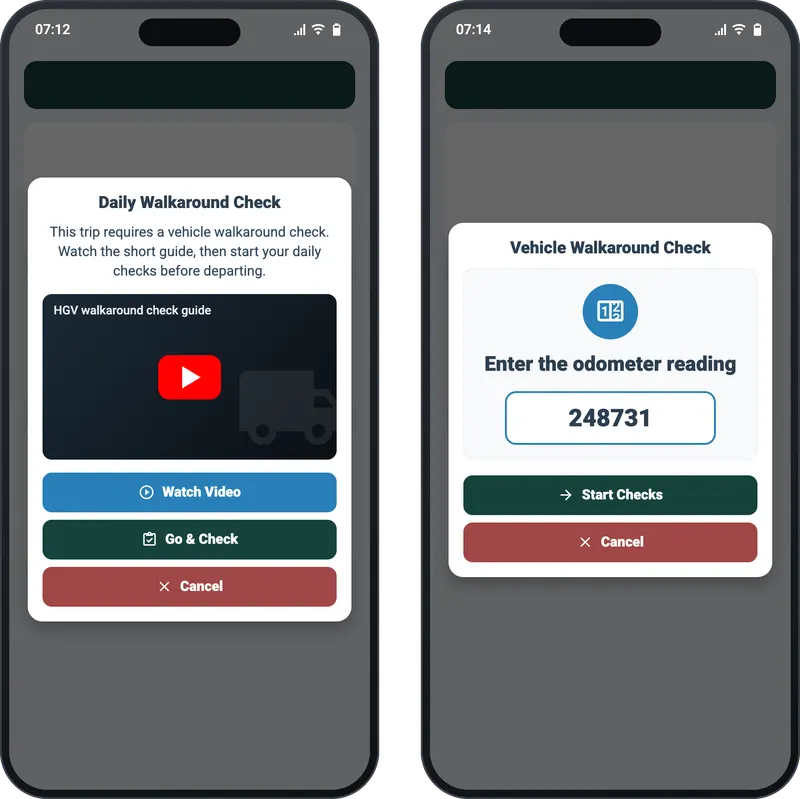
- Walkaround checks before every trip. The driver app can require the DVSA walkaround check before a trip starts, and each check and defect is kept against the vehicle.
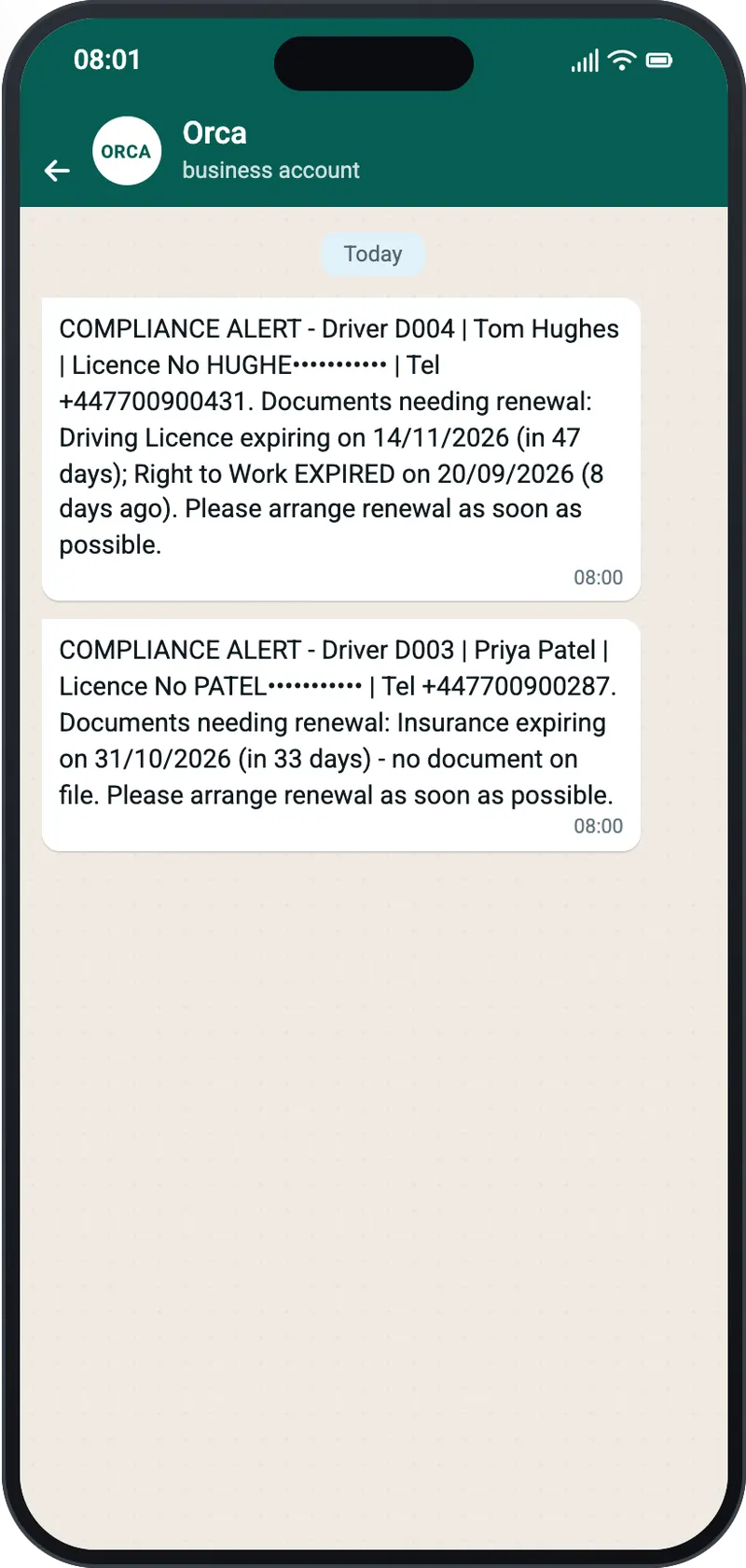
- Driver dates alongside vehicle dates. Orca checks drivers' licence, insurance and right to work expiry dates every morning and messages the fleet manager on WhatsApp about anything expired or due within 2 months.
Safety inspection, tachograph and tail lift dates come from your maintenance provider and examiners. Keep their reports, and plan those dates with the routine above.
Your HGV compliance checklist
- Every vehicle and trailer is on one list, with its registration and plated weight.
- Safety inspections are booked at least 6 months ahead, at the interval on your licence.
- Vehicles 12 years and older are inspected at least every 6 weeks.
- Annual tests are booked well before the expiry date.
- Tachograph calibration dates are recorded and booked.
- Tail lift examination dates are recorded from the last report.
- Tax and insurance renewal dates are recorded.
- Drivers do a walkaround check before every use, and defects are fixed.
- Records are kept for at least 15 months.
For the records side, see what the Traffic Commissioner expects from your records, and for the daily check, the DVSA walkaround check.
Frequently asked questions
How often should an HGV have a safety inspection?
DVSA guidance says between every 4 and 13 weeks, depending on the work the vehicle does, at the interval stated on your operator licence. Vehicles and trailers aged 12 years and older must be inspected at least every 6 weeks.
When is an HGV's first annual test due?
The first test is due 12 months after the vehicle was first registered, and then every year. Trailers are usually first tested one year after they were first sold or supplied.
How often does a tachograph need calibrating?
Digital and smart tachographs must be recalibrated every 2 years, and after certain events such as a repair to the tachograph or a change of tyre size.
Does a tail lift need a LOLER inspection?
Yes. A tail lift is lifting equipment. HSE says equipment used to lift people must be thoroughly examined at least every 6 months, and other lifting equipment at least every 12 months, unless a scheme of examination says otherwise.
How far ahead should I plan safety inspections?
DVSA's guidance says at least 6 months ahead, so the dates are booked and visible before they are due.
Orca brings vehicles, DVLA data, walkaround checks and driver compliance into one system for UK operators. See Orca for transport and logistics, or get in touch to see it with your own fleet.